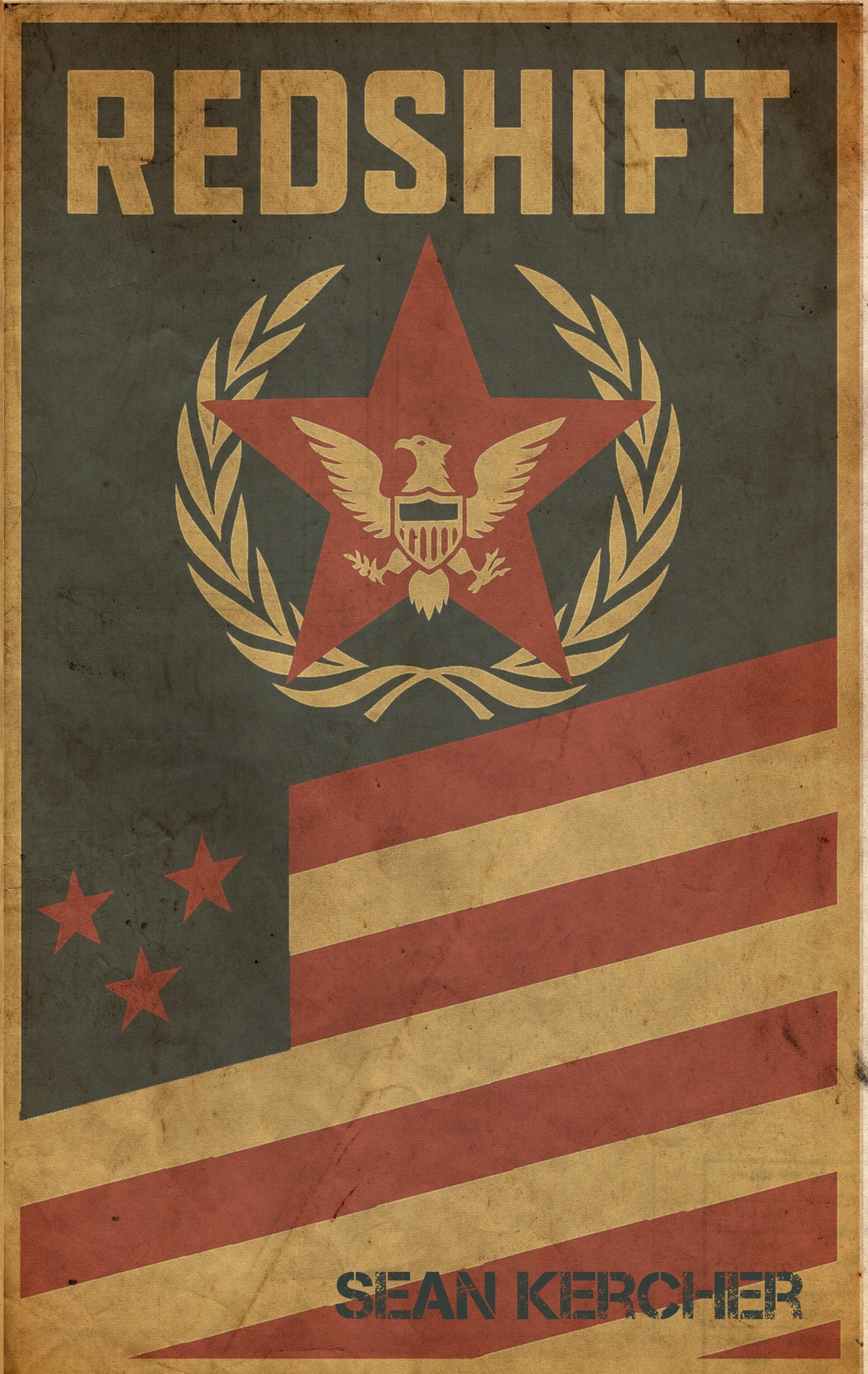
The pounding feet echoed off the alleyway walls as Heidi and Rikard ran for their lives. They had played too loose this time and now the Bundeskriminalamt, or BKA, and the Grenzschutzgruppe 9, or GSG 9, were on their trail. And too close to shake. They would not be escaping to East Berlin tonight and would probably find themselves within the walls of Stammheim Prison. They could hear the police sirens as the Polizei Berlin and Kripo tightened the net. Hilde was at home, with an unsuspecting babysitter. They had told her they were going to dinner and a movie, not attempting to assassinate Horst Herold when he too was attending a movie. It was too bold by far, but the opportunity was there, and the timing was right. Andreas Baader, Ulrike Meinhof, Jan-Carl Raspe, and Gudrun Ensslin had all been sent there while awaiting their trial. A well-placed decapitation of the Kripo now would hamstring the prosecution and help buy time for an escape attempt. But they had been betrayed somehow and now they were hoping beyond hope to get to the small apartment on Bernauer Straße. The tunnel ran from a dilapidated outhouse and would emerge on the other side of The Wall in the utility room of the apartment building that held their safehouse in East Berlin. Maintaining real DDR citizenship helped keep an escape route open. The Stasi was all too happy to not look in their basement for the right price and even some American cigarettes from time to time, but that relationship was one-sided at best. The first sign of trouble was that they’d disavow the couple and destroy the exit. The Deutsche Demokratische Republic, or the DDR, was the government of East Germany during the cold war. The name translated out to the German Democratic Republic, pushing the idea that the East Germans had a say in the government that Moscow imposed on them after World War 2, and supported politically since. While the rest of Europe was liberated from the Nazi regime, the East Germans just traded fascism for Soviet style socialism. And it was because of that, Heidi and Rikard were willing to operate in the West. Socialism was an ultimate good they both believed. They had food, shelter, and could raise their child without fear of want. So long as they worked. Heidi’s family had been split between East and West when The Wall came up, and she saw the struggles of good Socialists in the West and vowed to spread Marx and Lenin’s message to the rest of the world. By peace if possible. But the Bourgeoisie had turned it violent and so by war was the path she took. Rikard was just an ideologue and a romantic. He believed in Socialism and believed that if he helped Heidi, he’d be supporting the woman he loved. Tonight, though, everything was falling apart. They still had a mile to go to Bernauer, and the sirens were too loud. “Halt!” came the shout from behind them. The German officer’s voice sounded different, more bourgeois and tainted by Western media. “Place your hands up and turn around slowly.” The click of the hammer being pulled back on the BKA officer’s gun echoed off the buildings in the alleyway. Rikard looked at Heidi, both shaking. There was only one talking; maybe they had caught a break and could get away from him and still make it. Rikard lurched to run and a chorus of shots rang out. Heidi hadn’t moved an inch. She hadn’t come to the same conclusion as Rikard. She thought only of Hilde, and she was willing to take her chances. But the bullets tore into her just as they ripped apart Rikard’s jacket, throwing him to the ground. She felt weightless as the ground came up to catch her, darkness swelling. By the time her body hit the ground, she was already gone. Another mile away, the BKA knocked loudly on their apartment door, waking Hilde and her babysitter. The babysitter brought the crying infant to the door with her and screamed when she was ripped from her hands as officers streamed in to search for evidence. The story ran on the news the next morning and faced little attention. In the West, it was just another couple of terrorists who played a stupid game and got a stupid prize. For those in the East, it was just another example of the horrors of Capitalism and was painted as such by their state media. Hilde entered the West German foster system—an institution that would, decades later, become infamous for the abuses uncovered after Dr. Helmut Kentler’s so-called “experiment,” in which boys were intentionally placed with known pedophiles, was discovered. By the time Hilde reached adolescence, Kentler’s original network was already collapsing. But the Nothilfe Haus für Kinder was a small foster care service home, staffed by Kentler’s ideological disciples—true believers who twisted his theories into their own warped practices. They claimed that “therapeutic intimacy” could stabilize troubled youth, and that carefully chosen caretakers could provide the affection the state could not. They also believed that these caretakers would themselves be cured of their afflictions by the act of caring for a troubled youth. The reality was cruelty hiding behind academic jargon. Hilde was left in the care of adults who saw her vulnerability as an opportunity rather than a responsibility. The system did nothing. It looked away—sometimes intentionally, sometimes out of convenience. What she endured there taught her to treat tenderness and affection not as expressions of trust, but as currencies to trade for safety, attention, or simply to keep harm at bay. She repeated those abuses on her own daughter, born in the early 1990s and died by suicide in the late 2010s, while doting on her son Sven—spoiling him and excusing his violent outbursts. The state of Baden-Württemberg finally took notice of Sven’s mental illness, but only after he was caught abusing his son, Franze. Franze grew into a timid man, the fire of life beaten out of him by the father he despised—leaving him just bold enough to speak of Sven’s brutality with quiet venom. This was the legacy Franze left to his son Erik—one Erik in turn passed to his own son, Reinhardt: a family line that began with boldness, only to have it beaten out of them across three generations. Erik himself was no longer timid, yet neither was he a man of action. He lived only to satisfy needs; ambition, he believed, was a luxury for better men. Reinhardt refused to inherit that defeat. He was born with a spark his father neither nurtured nor tried to extinguish—something entirely his own. The streets of Berlin were his. He had built up his network, managed each piece with efficiency and tolerated no deviation. He admired Heidi and Rikard, those people born one hundred years before him, and used them as inspiration for how to really live. He'd killed his father out of that same thirst for life. Not maliciously, but out of pity. His father was a soulless corpse with a heartbeat. When he’d turned and seen Reinhardt pointing the gun at him, he barely blinked. He left this world with a sad look of disgust and, Reinhardt believed, a disappointment that it had taken that long. But now, ten years later, he ran one of the more lucrative private automated-trucking systems in Berlin. Germany’s nationalized firms still dominated the long-haul infrastructure, but private operators were more flexible in the cities and states. The Autobahn belonged to the Fatherland; Potsdamer Platz was Reinhardt’s. This morning, he walked the line of autonomous trucks, checking for damage as much as making himself visible to the loaders and maintenance crew on his docks. Reinhardt Zeitler was the kind of man people noticed without quite registering why. They might pick out his face or his stance, only to lose him again in the crowd of working-class Germans. He was both notable and forgettable—a balance he appreciated, despite or perhaps because of the traits that made it possible. He stood around six feet tall, broad through the shoulders, built with a compact, functional strength—the kind earned from long days of real labor rather than gym memberships or leisure-time vanity. As he moved through the line, his workers would have described his presence as relaxed yet coiled, every muscle seemingly conditioned to be ready without announcement. Even his gait betrayed that contradiction, smooth and fluid despite his size, all of it carried with a cold efficiency that made him look like a man who never wasted motion. It was his face that told the true story of Reinhardt’s life. The nose broken in his youth had never quite healed right, leaving his features set in a permanent hardness. His beard—kept short, rough, and already going salt-and-pepper earlier than most men his age—had become an advantage; it convinced others to take him seriously before he had earned the years to demand it. His gray eyes completed the impression, sharp and steel-hard at first glance, but with a faint warmth buried deeper, the trace of a gentler man he might have been if life had not taught him otherwise. While TransWerk Deutschland—TWD—had largely gone fully automated, he still kept humans on staff if only to have immediate emergency response. A conveyor belt couldn’t repair a jammed sorting gate. Mostly, though, he hated the way capitalism had turned labor into a contest between people and machines. He believed, as his ancestors had, that certain great historical wrongs had yet to be righted. But while he was powerless to change anything, he would use their system to his advantage. “Chef, wir haben ein Problem,” one of the workers called, stepping from behind a truck. “This one was broken into. We found this on the floor.” Inside lay an elderly man, unconscious, dressed in clothes that looked like something out of old Winnetou films. “Was anything stolen?” Reinhardt asked, glancing at the stacked deliveries. He assumed the truck had been recalled because of the unexpected weight. “Doesn’t look like it.” The worker lowered his voice, uneasy. “And the door was still locked. I don’t know how he got in.” Reinhardt frowned. “Are you saying someone broke in and then locked him inside?” “That’s what it looks like.” The stranger stirred, mumbling something that sounded like English. Reinhardt could speak English, but was no longer proficient enough to be sure he’d understand the man. “Grab me a translator,” he said, leaning in to listen anyway. A minute later the worker returned with a small device shaped like an old hearing aid: an earpiece connected to a slim box behind the ear. The paired units used AI to translate speech in real time, improving as the conversation went on. Reinhardt slipped the device into his ear while the worker gently fitted the other into the old man’s. At first the words came haltingly as the software struggled to parse phrasing. “Ich muss ihn finden. Ich muss Grady finden,” came the translated voice in Reinhardt’s ear: I must him find. I must Grady find. The clumsy literal translation made Reinhardt scowl. “I’m sorry, who are you?” Reinhardt asked, more interested in why the man was in his truck than in whoever ‘Grady’ was. “I brought back his device,” the man rasped, barely lifting his head. “I brought it back before—” A wet, racking cough cut him off, followed by a deep sigh—and then silence. “My God, Boss,” the worker murmured, removing his cap. “I think he’s not breathing anymore.” “Great. Just what I needed.” Reinhardt stepped back, pacing. The Polizei were the last thing he wanted in the middle of operations. “Send the truck out and have it stop somewhere less public. Tell the cops to collect the vagrant’s body there.” “Yes, Boss.” The man climbed out of the truck and handed Reinhardt the object the stranger had mentioned, trading it for the earpiece. “I grabbed this from him—it doesn’t look like something a homeless man would own.” Reinhardt studied the device: old, early-2000s-era plastic, scratched but the glass screen still clear. What puzzled him most was the display: beside a red button marked RETURN glowed a string of numbers formatted in the annoying American style—month/day/year. It read: 5 / 27 / 1233. “I’ll be in my office,” he muttered. “Handle the body.” Redshift takes readers from the shadows of a restored history into a brutal, authoritarian America that was never meant to be. As custodians of time, the mission should be straightforward: pinpoint the temporal sabotage and restore the original timeline. But what if the team is completely cut off, trapped in a dystopian 1984 and hunted by a regime desperate to protect its own existence? How do you save the future when you are stranded in a timeline with no way out? To read more, visit Redshift Copyright © 2026 by Sean Kercher
All rights reserved. No part of this book may be reproduced, stored in a retrieval system,
or transmitted in any form or by any means—electronic, mechanical, photocopying, recording,
or otherwise—without the prior written permission of the copyright holder,
except in the case of brief quotations embodied in critical articles or reviews.
This is a work of fiction. Names, characters, places, and incidents are either the product
of the author’s imagination or are used fictitiously. Any resemblance to actual persons,
living or dead, events, or locales is entirely coincidental.
Prologue
West Berlin, Germany – April 15, 1975