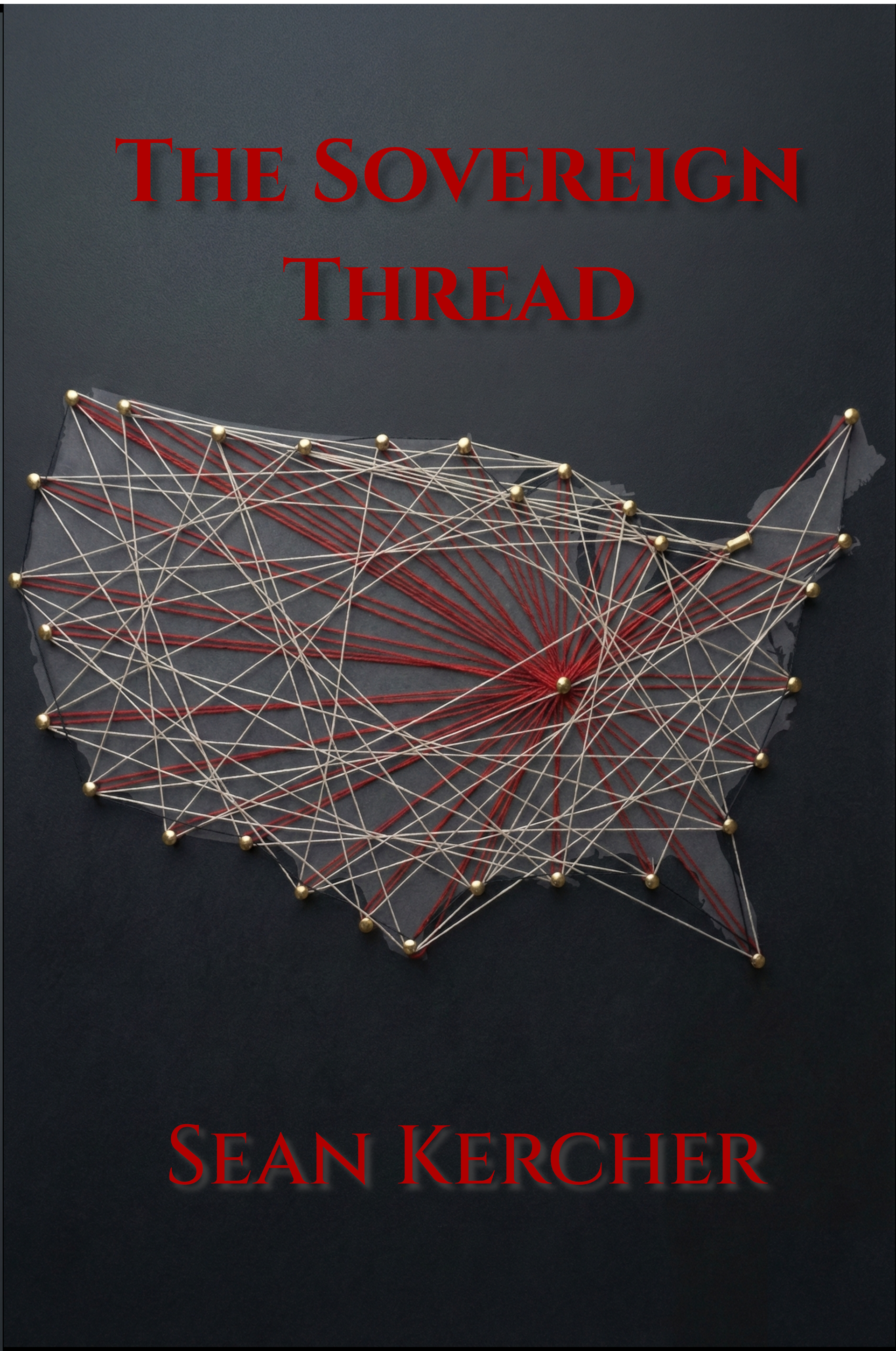
James always felt a little like Indiana Jones whenever they recovered something the world hadn’t seen since antiquity. It belongs in a museum! That seemed to be the guiding principle—what made it acceptable to lift something out of its rightful century, so long as it would end up in a collection rather than forgotten forever. Object recovery was always a paid service. The Epsilon Book had been one of those jobs, though they’d left it to be found more by accident than design. Most of the time, James only watched and took notes. Sometimes, they would leave those notes in the past to age into the record naturally, or hand them to Grady so a client could receive them fresh, with an explanation of why they looked new while still reading like a primary source. Those were the hardest jobs, the ones they avoided unless Grady insisted—he liked to use them as quiet updates to scholarship, a calling card for The Archivist. But today, they were recovering the impossible. Something no one alive had seen in nearly two thousand years, something they would hide here and later let the client claim for themselves: the Aquilae of the IX Legion Hispania, Rome’s storied Ninth Legion, vanished from history around 120 CE. James and Celeste had followed the legion for days as it marched north through the English countryside toward Caledonia. The plan was simple. Watch the battle that destroyed it. Note where the Aquila—the gold eagle standard—fell or was captured. Jump back to the present, mark the coordinates, and walk away. Easy enough. From a distant rise, they watched the legion being drawn into a pincer attack, Caledonian raiders and Briton insurgents pressing on both sides. It was strange and fascinating to see these two groups—normally enemies themselves—move in tandem, exploiting every weakness in Roman formation until the disciplined lines faltered and broke. “All we have to do is wait for the Aquila to drop,” James said, scanning the chaos. “That gold eagle on the pole. Once it falls, we take note and go home.” Celeste only nodded. She hadn’t spoken all day, only watched, her eyes following the chaos below. The distance dulled the worst of it—the sounds were thin and flattened by the air, the smoke a faint veil over the valley. The sun dipped low. James felt like the silent journey from their safe perch to the first dead was surprisingly short. Perhaps he’d lost track of time, or simply misjudged how far the outer edges of the battlefield stretched from the center line. The field stretched around him, a landscape of bodies and churned mud. The air reeked of iron and rot, the smell that clung to every battlefield, the same he’d first known at Gettysburg. A haze—fog or smoke, he couldn’t tell—hung low, coiling between the fallen. In the center of it all stood the Aquila, the gold eagle fixed on its wooden pole, as if planted into the earth itself. Around it the bodies lay thick, Caledonian and Legionnaire alike, as though the standard had been the only prize worth dying for. Not for glory. Not for hearth and home. Just for this gilded emblem left jutting from the dirt like a marker over a grave. James stepped forward. There was no clear ground anymore, only the soft press of corpses beneath his boots. They didn’t stir. No groans here, no movement—only the silent dead. He felt the weight of every step, as if each one demanded a silent apology he could never give. His hand reached for the standard. Fingers brushed the wood— “James. This is horrible.” He froze. Celeste stood just beyond the Aquila, in a small clearing where the dead had thinned. Her skirt was soaked in blood to the knees, clinging dark and heavy. She said nothing more, only stared, eyes wide and wet with horror. “Celeste? I thought you were staying behind!” James called, forgetting the standard, scrambling toward her across the bodies. “Nox aeternum venit!” The shout came from beneath him—a voice from the pile of dead. A Legionnaire, pale and broken, rose just long enough to drive his gladius deep into Celeste’s abdomen before collapsing back into the heap. “NO!” James lunged, but the bodies shifted beneath him, hands—or what felt like hands—closing around his ankles, holding him in place. “James?” Celeste’s voice was faint, distant. She clutched her wound lightly, almost as if curious about it, her gaze fixed on him. “Stay there! I’m coming!” He fought against the grasping weight of the dead, straining toward her as she swayed on her feet. “James? Wake up.” The battlefield shattered. James sat up with a gasp, drenched in sweat, lungs heaving as if he’d run a mile. The sound of battle was gone, replaced by the quiet dark of their room in 1875 New York. Celeste’s hand rested against his chest, steadying him as he came back to himself. “You’re safe,” she said softly, fingers brushing his forehead, threading through his damp hair. “It was only a dream.” He tried to breathe evenly, swallowing hard. “I… I saw you hurt. In the past. I couldn’t get to you. Couldn’t save you. I knew I couldn’t use the Anti-Chronometer—I didn’t know when you’d arrived, only that you followed me into danger.” Her hand lingered, comforting, wordless for a moment. Then, a faint smile. “I know you’d try, no matter what. You already saved me once. You would again, whatever the cost.” James let himself fall back, eyes closing as his breathing slowed. The nightmare was already unraveling, but one thought lingered, sharp and certain. He would never bring Celeste to a battlefield like that. The Sovereign Thread takes readers from a familiar world to one that should have never existed. As self-proclaimed custodians of time, the decision should be easy to just put everything back and restore the original timeline. But what if things were better this time around? What then? To read more, visit The Sovereign Thread Copyright © 2026 by Sean Kercher
All rights reserved. No part of this book may be reproduced, stored in a retrieval system,
or transmitted in any form or by any means—electronic, mechanical, photocopying, recording,
or otherwise—without the prior written permission of the copyright holder,
except in the case of brief quotations embodied in critical articles or reviews.
This is a work of fiction. Names, characters, places, and incidents are either the product
of the author’s imagination or are used fictitiously. Any resemblance to actual persons,
living or dead, events, or locales is entirely coincidental.
1. Nightmares and Reunion